




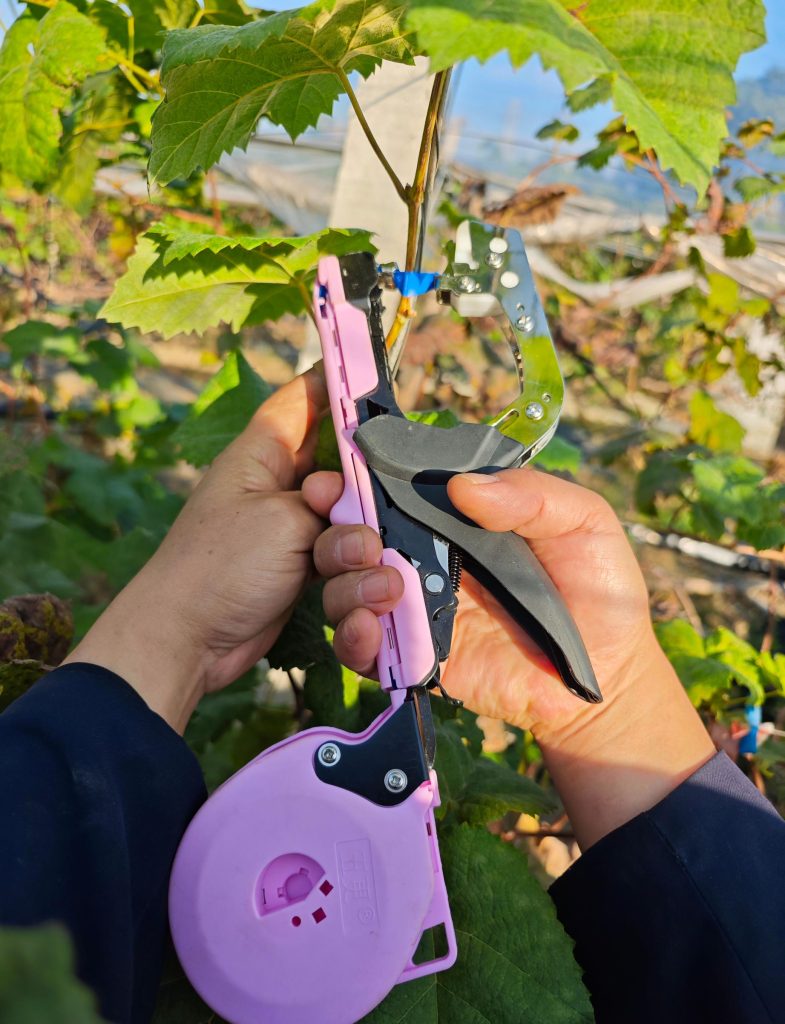
Keywords: plant tying machine, tomato tying machine, grape vine tying tool, plant tape tool, tapener tool
For farmers, greenhouse growers, and gardeners, supporting climbing plants is an important part of crop management. Traditional manual tying methods require a lot of labor, especially for large-scale vineyards, tomato farms, cucumber greenhouses, and other climbing crops.
A plant tying machine is designed to make plant support faster, easier, and more efficient. With one simple operation, growers can quickly attach stems to support poles, wires, or trellises while reducing labor costs.
In this guide, we will explain what a plant tying machine is, how to use it, and why it has become an essential tool for modern agriculture.
What Is a Plant Tying Machine?
A plant tying machine, also called a tapener tool or plant taping machine, is a handheld agricultural tool used to tie plants with special PVC plant tape and staples.
The machine combines three steps into one operation:
- Wrap plant tape around the stem and support
- Cut the tape automatically
- Fix the tape with a staple
Compared with traditional rope tying, the plant tying machine provides a faster and cleaner solution for supporting plants.
It is widely used for:
- Grapevines
- Tomato plants
- Cucumber plants
- Pepper plants
- Passion fruit vines
- Greenhouse vegetables
- Climbing flowers
- Nursery plants
Why Use a Plant Tying Machine?
1. Save Labor Time
Manual tying requires workers to repeatedly pick up rope, make knots, and adjust plants.
A professional plant tying machine can complete thousands of ties per hour, greatly improving working efficiency.
For commercial farms, this means:
- Less labor cost
- Faster plant management
- Higher productivity
2. Protect Plant Growth
A good plant support system should hold the plant firmly without damaging the stem.
Plant tying machines use flexible PVC tape, which provides:
- Strong holding force
- Good elasticity
- Weather resistance
- Reduced stem damage
The tape expands as plants grow, allowing healthy development.
3. Improve Crop Management
Proper plant tying helps:
- Keep plants upright
- Improve sunlight exposure
- Increase air circulation
- Reduce disease risk
- Make harvesting easier
For vineyards and greenhouses, organized plant growth can significantly improve farm management efficiency.
How to Use a Plant Tying Machine Step by Step
Step 1: Install Plant Tape and Staples
Before operation:
- Open the tape holder
- Install the PVC tying tape roll
- Install compatible staples
- Make sure the tape feeds smoothly
Different models may use different staple sizes, such as 604C staples.
Step 2: Position the Plant
Place the machine around:
- The plant stem
- The supporting wire, stick, or trellis
Make sure both the plant and support are inside the tying area.
Step 3: Press the Handle
Squeeze the handle completely.
The machine will automatically:
- Wrap the tape
- Cut the tape
- Insert the staple
One operation completes the entire tying process.
Step 4: Check the Tie
After tying:
- Make sure the plant is fixed securely
- Avoid tying too tightly
- Adjust the position if necessary
A proper tie should support the plant while allowing natural growth.
Plant Tying Machine Applications
Tomato Tying Machine
Tomatoes are one of the most common applications.
Greenhouse tomatoes often require regular support because branches become heavy as fruits grow.
A tomato tying machine helps:
- Support tomato stems
- Organize branches
- Reduce manual tying work
Grape Vine Tying Tool
Vineyards require thousands of plant ties every season.
A grape vine tying tool helps growers:
- Attach vines to trellis wires
- Manage new shoots
- Improve vineyard structure
It is suitable for:
- Table grapes
- Wine grapes
- Commercial vineyards
Greenhouse Vegetables
For cucumber, pepper, and climbing vegetables, plant tying machines help maintain vertical growth and improve greenhouse space utilization.
Plant Tying Machine vs Traditional Manual Tying
| Feature | Plant Tying Machine | Manual Tying |
|---|---|---|
| Speed | Fast operation | Slow |
| Labor Cost | Lower | Higher |
| Operation | Simple | Requires experience |
| Tie Quality | Consistent | Depends on worker |
| Large Farms | Excellent | Difficult |
For professional growers, a plant tying machine is a more efficient agricultural solution.
How to Choose the Right Plant Tying Machine?
When selecting a plant tying machine, consider:
1. Crop Type
Different crops require different tying methods.
Examples:
- Grapes → vineyard tying machine
- Tomatoes → tomato tying machine
- Greenhouse vegetables → lightweight tapener tool
2. Tape Compatibility
Choose machines compatible with:
- PVC plant tape
- Agricultural tying tape
- Standard staples
High-quality tape should have:
- Good flexibility
- Strong adhesion
- UV resistance
3. Ergonomic Design
A good tying machine should have:
- Comfortable handle
- Lightweight body
- Smooth operation
- Durable internal parts
This reduces hand fatigue during long working hours.
Conclusion
A plant tying machine is an essential tool for modern agriculture. Whether you manage a vineyard, greenhouse, or vegetable farm, this tool can help reduce labor costs, improve efficiency, and create better plant support systems.
With faster operation and reliable tying performance, plant tying machines are becoming increasingly popular among professional growers worldwide.
If you are looking for a reliable plant tying machine, tomato tying machine, or grape vine tying tool, choose a supplier that provides high-quality products, stable accessories, and OEM customization support.
发表回复