




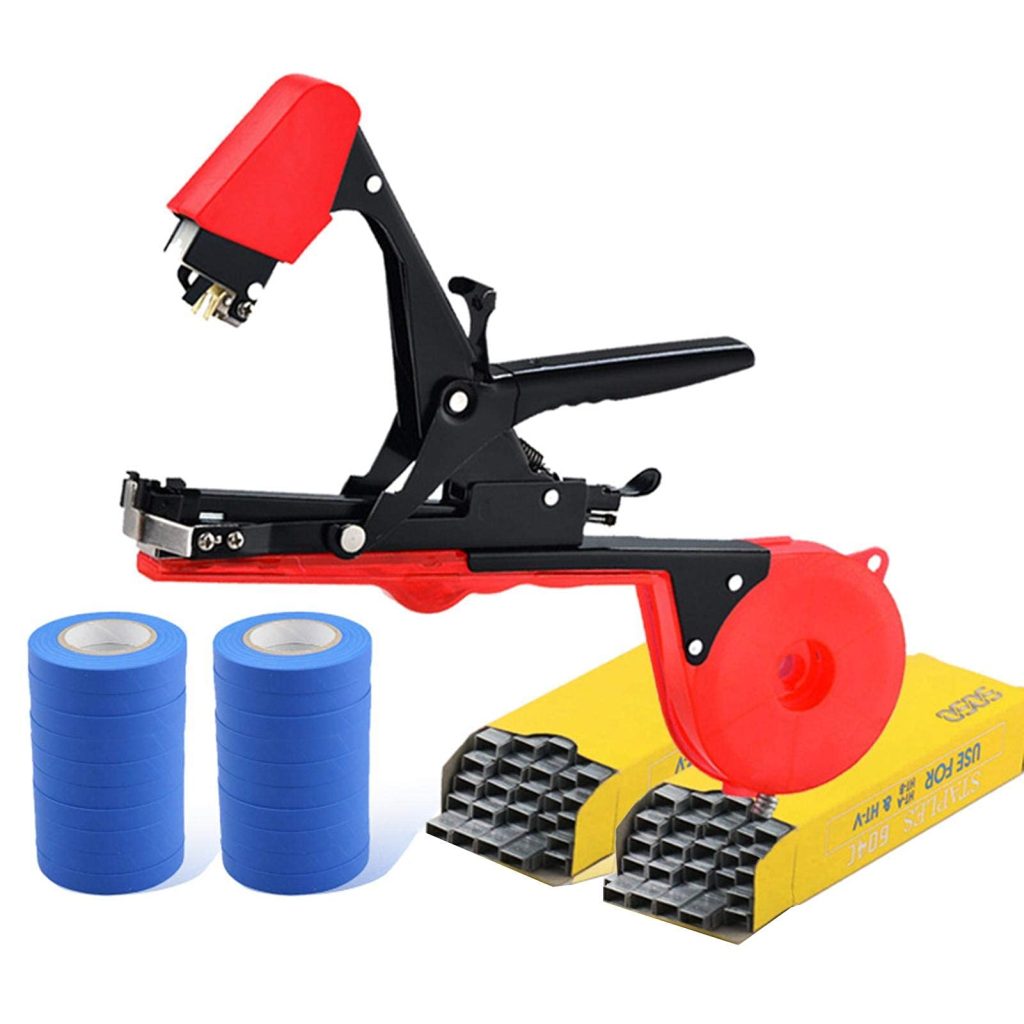
Supporting climbing plants is an important part of vineyard, greenhouse and vegetable farm management. Crops such as grapes, tomatoes, cucumbers and peppers need to be attached to stakes, wires or trellises so that they can grow in the correct direction.
Traditional hand tying can be slow and tiring, especially when workers need to manage hundreds or thousands of plants. A manual plant tying tool provides a faster and more practical way to complete this work.
What Is a Manual Plant Tying Tool?
A manual plant tying tool is a handheld agricultural tool designed to secure plant stems and vines to support structures.
It is also commonly called:
- Plant tapener
- Plant binding tool
- Vine tying tool
- Tomato tying tool
- Garden tapener
- Plant support tying machine
The tool uses plastic tying tape and staples. During operation, it wraps the tape around the plant and support, fastens the tape with a staple and cuts it automatically.
The entire tying process can be completed with one simple pressing action.
Why Is Plant Tying Important?
Many climbing plants cannot remain upright without additional support. Proper tying can help growers:
- Guide plants along the correct growing direction
- Prevent stems from falling onto the ground
- Improve air circulation around the crop
- Increase exposure to sunlight
- Make pruning and harvesting easier
- Keep planting rows neat and organized
- Reduce damage caused by wind
Correct plant support can also make daily crop inspection and greenhouse maintenance more convenient.
Advantages of Using a Plant Tapener
Faster Daily Operation
When tying plants by hand, workers need to prepare the string, wrap it around the stem, make a knot and cut the material.
A plant tapener combines these actions into one process. The worker only needs to position the plant and support inside the tool and press the handle.
This makes the tool especially useful during periods when plants grow quickly and require frequent support.
Helps Reduce Repetitive Labor
Plant tying is repetitive work. On a large farm, workers may need to repeat the same movement thousands of times.
A manual plant tying machine simplifies the process and helps workers complete more plants during the same working period.
Consistent Tying Results
The tool produces similar tying loops each time. This helps keep plants supported in a clean and consistent way.
Uniform tying is useful for professional vineyards, commercial greenhouses, vegetable farms and nurseries.
Lightweight and Portable
A manual tapener does not require electricity, batteries or compressed air. It can be carried easily between different planting areas.
Growers can use it outdoors, inside greenhouses or in locations where power is not available.
Suitable for Different Crops
The same tool can be used for many types of plants, including:
- Grapevines
- Tomato plants
- Cucumber vines
- Pepper plants
- Eggplants
- Kiwi vines
- Raspberry plants
- Melon vines
- Flowers
- Nursery plants
- Young fruit tree branches
How to Use a Plant Tying Tool
The basic operation is simple.
Step 1: Install the Tying Tape
Open the tape compartment and place the tape roll inside. Pull the tape through the correct guide path.
Make sure the tape moves smoothly before starting work.
Step 2: Load the Staples
Open the staple magazine and insert compatible staples. Do not overload the magazine.
Close the magazine securely after installation.
Step 3: Pull Out the Tape
Press the handle gently and release it. The front hook should catch the tape and pull it across the opening.
Step 4: Position the Plant
Place the plant stem and support wire, stake or trellis inside the tool opening.
Avoid positioning the tool too close to tender leaves, flowers or growing points.
Step 5: Complete the Tying
Press the handle fully. The tool will wrap, staple and cut the tape.
Release the handle and check that the plant has enough space to continue growing.
How Tight Should the Tape Be?
The tying loop should support the plant without squeezing the stem.
Plants become thicker as they grow. If the loop is too tight, it may restrict growth or damage the surface of the stem.
Growers should leave a suitable amount of space according to the crop type, stem thickness and growth stage.
It is also recommended to inspect older tying positions regularly and replace the tape when necessary.
Choosing the Right Tying Tape
Plant tying tape is available in different thicknesses, widths and colors.
Softer and thinner tape is generally suitable for young or delicate plants. Stronger tape may be more suitable for mature vines and outdoor growing environments.
When choosing tape, consider:
- Plant size
- Stem strength
- Outdoor or greenhouse use
- Expected tying period
- Weather conditions
- Compatibility with the tapener
Using the correct tape can improve tying performance and reduce the possibility of plant damage.
Maintenance Tips
Regular maintenance helps keep the plant tying tool working smoothly.
After daily use:
- Remove soil, leaves and plant residue
- Check the tape feeding path
- Inspect the cutting blade
- Remove damaged staples
- Keep the moving parts clean
- Store the tool in a dry location
- Avoid leaving the tool outdoors in rain or high humidity
If the tape cannot be pulled correctly, check whether it has been installed in the correct direction.
If the staple does not close properly, inspect the staple magazine, pressing plate and front mechanism.
Who Can Use a Plant Tying Tool?
A manual plant tapener is suitable for:
- Vineyard owners
- Vegetable growers
- Greenhouse operators
- Orchard workers
- Flower growers
- Nursery businesses
- Agricultural distributors
- Landscaping companies
- Home gardeners
It is useful for both small-scale gardening and professional agricultural production.
Improve Plant Management with a Simple Hand Tool
A plant tying tool is a practical solution for growers who want to complete plant support work more efficiently.
It is easy to operate, portable and suitable for many crops. By reducing the time required for repetitive hand tying, it allows workers to focus on other important tasks such as pruning, watering, fertilizing and harvesting.
For vineyards, tomato farms, cucumber greenhouses, orchards and nurseries, a reliable plant tapener can become an essential part of daily crop management.
We supply manual plant tying tools, tying tape, staples and related replacement parts. Wholesale orders and OEM/ODM customization services are available.
Contact us for product specifications, samples and wholesale pricing.
Website:
https://nkc-tapetool.com/
Email:
nbkm955@gmail.com
Leave a Reply