




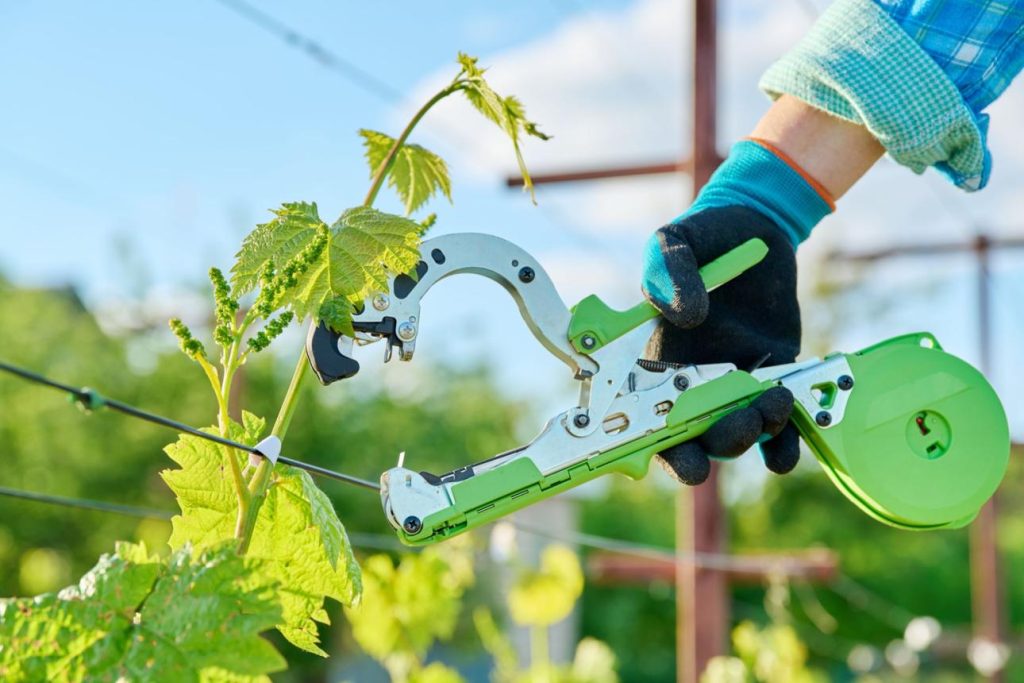
Efficient plant support is an important part of vineyard, orchard, greenhouse, and vegetable farm management. As crops grow, stems and branches often need to be fixed to stakes, wires, trellises, or other support structures.
Tying plants by hand with rope or string takes time and can create inconsistent results. A manual plant tying tool provides a faster, cleaner, and more convenient way to secure plants while reducing labor costs.
What Is a Plant Tying Tool?
A plant tying tool is a handheld agricultural device used to bind plant stems or branches to a support structure.
It is also commonly called:
- Plant tapener
- Plant binding tool
- Vine tying tool
- Garden tapener gun
- Plant support tying machine
- Manual plant tying machine
The tool uses tying tape and staples to complete the binding process. During operation, the tape wraps around the plant and support, the staple fixes the tape, and the built-in blade cuts it automatically.
This process can usually be completed with one hand.
How Does a Manual Plant Tapener Work?
The working process is simple:
- Install the plant tying tape.
- Load the matching staples.
- Press the handle lightly to catch and pull the tape.
- Place the plant stem and support wire inside the tool opening.
- Press the handle completely.
- The tool staples and cuts the tape automatically.
The plant is then securely connected to the support without the need for manual knotting.
Main Advantages of Using a Plant Binding Tool
Faster Than Traditional Hand Tying
Traditional plant tying requires workers to cut string, wrap the plant, and make a knot. This process must be repeated for every plant.
A manual plant tying tool combines wrapping, stapling, and cutting into one action. It can greatly improve working efficiency, especially in large vineyards and commercial greenhouses.
Easy One-Hand Operation
The tool can be operated with one hand, allowing the worker to position the plant with the other hand.
This design is especially useful when working with long planting rows, trellis systems, or climbing plants.
Reduced Labor Requirements
Labor costs are a major concern for professional growers. Using a plant tapener can reduce the time needed for plant training and support work.
One worker can complete more tying tasks in the same amount of time, helping farms improve productivity during busy growing seasons.
Consistent Tying Results
Hand-tied knots may be too tight, too loose, or uneven. A plant tying machine creates more consistent loops.
Uniform plant support helps maintain organized rows and improves crop management.
No Electricity or Battery Required
The manual plant tying tool does not require charging, batteries, electricity, or air pressure.
It can be used directly in:
- Remote farmland
- Outdoor vineyards
- Greenhouses
- Orchards
- Nurseries
- Home gardens
This makes it a practical and low-maintenance agricultural tool.
Suitable Crops and Applications
The manual plant binding tool is suitable for many plants that require support during growth.
Vineyard Applications
In vineyards, grape vines need to be fixed to support wires to control their growth direction.
A vine tying tool can help growers organize branches, improve sunlight exposure, and maintain better airflow around the grapes.
Greenhouse Vegetables
Greenhouse crops often grow quickly and need regular support. The tool can be used for:
- Tomatoes
- Cucumbers
- Peppers
- Eggplants
- Beans
- Melons
Using a plant tapener helps keep the plants upright and prevents fruits from touching the ground.
Orchard Branch Support
Young fruit tree branches can be tied to stakes or support structures to guide their growth.
The tool is suitable for orchards growing:
- Kiwi fruit
- Apples
- Pears
- Citrus fruits
- Cherries
- Other climbing or young fruit plants
Flower and Nursery Use
The plant tying tool is also suitable for flowers, nursery plants, climbing roses, and ornamental vines.
It can help improve plant appearance and keep branches growing in the desired direction.
How Plant Tying Improves Crop Growth
Correct plant tying is not only about keeping plants upright. It can also support healthier crop development.
Better Air Circulation
Organized branches create more space between leaves. Improved airflow can reduce humidity around the plant and help lower the risk of certain plant diseases.
Improved Sunlight Exposure
When plants are tied correctly, leaves and fruits receive more even sunlight.
This can support photosynthesis, fruit coloring, and crop development.
Easier Spraying and Maintenance
Organized plants are easier to inspect, spray, prune, and harvest.
Workers can move through planting rows more efficiently, and farm management becomes more convenient.
Reduced Stem and Branch Damage
Unsupported plants may bend, fall, or break under the weight of fruit.
Plant tying helps reduce pressure on stems and keeps the crop connected to a stable support structure.
How to Choose a Good Manual Plant Tying Tool
When selecting a plant tapener, buyers should consider the following factors.
Durable Construction
A strong metal structure provides better stability and a longer service life.
The tool should be suitable for repeated use in agricultural environments.
Smooth Tape Feeding
The tape should move smoothly through the tool without frequent jamming.
A reliable tape-feeding mechanism improves efficiency and reduces interruptions.
Sharp Cutting Blade
The blade should cut the tape cleanly after stapling.
A replaceable blade is useful for long-term maintenance.
Comfortable Handle
An ergonomic handle can reduce hand fatigue during continuous use.
This is especially important for workers tying hundreds or thousands of plants per day.
Compatible Tape and Staples
The tool should use readily available tying tape and matching staples.
Using compatible consumables helps ensure stable operation.
Plant Tying Tape Options
Plant tying tape is available in different colors, thicknesses, and materials.
Common colors include:
- Green
- Red
- Blue
- White
- Transparent
Green tape is popular because it blends naturally with plants and leaves.
When selecting tape, consider:
- Plant growth speed
- Stem thickness
- Outdoor weather conditions
- Required support strength
- Length of the growing season
The tape loop should provide enough support without restricting future plant growth.
Maintenance and Storage Tips
Regular maintenance can help keep the plant tying tool working smoothly.
After use:
- Remove broken tape pieces.
- Clean the staple channel.
- Check the blade for damage.
- Inspect the spring and moving parts.
- Store the tool in a dry place.
- Avoid long-term exposure to rain.
- Apply a small amount of lubricant when necessary.
Do not use damaged staples or unsuitable tape, as they may cause jamming or unstable binding.
Who Should Use a Plant Tapener?
A manual plant tying tool is suitable for:
- Vineyard owners
- Greenhouse growers
- Vegetable farmers
- Orchard managers
- Agricultural contractors
- Plant nurseries
- Garden tool distributors
- Agricultural equipment wholesalers
- Professional gardeners
- Home gardening users
It is especially valuable for businesses that need to complete large amounts of plant support work in a limited time.
Wholesale, OEM and Private Label Supply
We supply manual plant tying tools, plant tying tape, staples, blades, and related accessories for global agricultural markets.
Our services can include:
- Wholesale plant tapener supply
- Custom product colors
- Custom packaging
- Logo printing
- Private label service
- OEM and ODM production
- Tape and staple accessory sets
- Sample order support
- Bulk order pricing
Different packaging and accessory combinations can be prepared according to distributor, retailer, or importer requirements.
Conclusion
A manual plant tying tool is a simple but highly effective agricultural tool. It helps growers complete plant support work faster, reduce repetitive labor, and maintain more organized crops.
Whether used for grape vines, greenhouse tomatoes, cucumbers, fruit trees, or climbing plants, the plant tapener provides a practical solution for modern agricultural production.
For product specifications, wholesale prices, samples, customized packaging, or OEM cooperation, please contact us.
Website: https://nkc-tapetool.com/
Email: nbkm955@gmail.com
Leave a Reply