




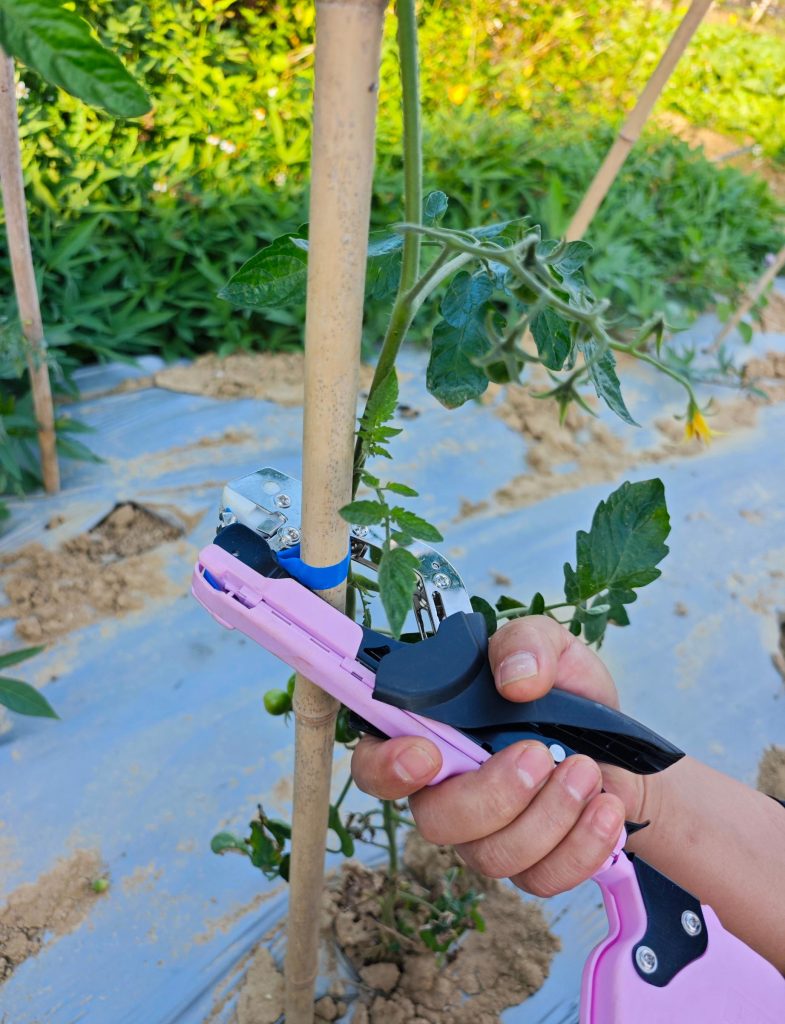
Supporting plant growth is essential for healthy crops. Whether you’re growing tomatoes or grapes, proper tying methods can improve yield and prevent damage.
In this guide, we compare traditional manual tying with the modern plant tying machine.
? Traditional Manual Tying
Manual tying involves using string or rope to secure plants to supports.
Pros:
- Low cost
- No tools required
Cons:
- Time-consuming
- Inconsistent tightness
- Labor-intensive
- Risk of damaging plants
For large farms, manual tying is simply not efficient.
⚙️ Using a Plant Tying Machine
A tapetool plant tying machine is designed to solve all these problems.
With one press, it automatically wraps tape and staples the plant securely.
? Advantages Over Manual Method
1. Speed
Complete binding in 1 second per tie
2. Consistency
Uniform tying improves plant growth
3. Reduced Labor Cost
One machine can replace multiple workers
4. Better Plant Care
Soft tape prevents stem damage
5. Professional Results
Clean and strong binding every time
? Comparison Table
| Feature | Manual Tying | Plant Tying Machine |
|---|---|---|
| Speed | Slow | Very Fast |
| Labor Cost | High | Low |
| Efficiency | Low | High |
| Plant Safety | Medium | High |
| Consistency | Low | High |
? Recommended Use Scenarios
A plant tying machine is perfect for:
- Vineyards (grape tying)
- Tomato farms
- Greenhouse planting
- Large-scale agriculture
- Commercial farming
? Tips for Better Tying
- Use high-quality PVC plant tying tape
- Choose compatible tapener staples
- Adjust binding tightness based on plant thickness
- Regularly clean and maintain the machine
? Final Thoughts
Switching from manual tying to a plant tying machine is one of the best upgrades for modern farming.
It not only improves efficiency but also ensures better crop quality and higher yields.
? Looking for a reliable supplier?
? Visit: https://nkc-tapetool.com
? Email: nkcyou133@gmail.com
Leave a Reply